
Throughout history, nations and peoples have faced moments when their sovereignty, culture, and identity were threatened by powerful external forces. In such moments, resistance becomes more than a military action; it becomes a declaration of dignity, courage, and determination. One of the most remarkable examples of resistance in African history is found in the Benin Kingdom, where brave generals led by the renowned Ologbosere stood firmly against British imperial aggression in the late nineteenth century.
History is frequently penned by the victors, framed in the clinical language of empires. In the Western archives, the fall of the Great Benin Kingdom in 1897 is often reduced to a swift, inevitable “punitive expedition”, a consequence of an empire enforcing its global order. But if you shift the perspective away from British gunboats and look squarely at the soil of the Edo people, a radically different story emerges.
This is not a story of passive subjugation. It is an epic of profound institutional strength, sophisticated military strategy, and a guerrilla war of resistance led by Benin’s master strategist: General Ologbosere.
A Clash of Sovereignty
By the late 19th century, the British Empire viewed West Africa as a ledger of resources waiting to be balanced. They wanted free, unhindered access to the interior to monopolize the incredibly lucrative trade of palm oil and ivory. Standing squarely in their path was the sovereign state of Benin, anchored by its monarch, Oba Ovonramwen.
The Oba understood the calculus of colonial expansion. He chose to guard his kingdom’s autonomy fiercely. Benin imposed its own taxes, heavily restricted foreign merchants, and tightly controlled the vital waterways. To the British, this was an intolerable bottleneck; to the Edo, it was the basic exercise of national sovereignty.
The Benin Kingdom was one of the most sophisticated and powerful states in West Africa. Renowned for its advanced political organization, artistic achievements, and military prowess, the kingdom had maintained its independence for centuries. The Oba of Benin ruled over a well-structured society supported by capable chiefs, warriors, and military commanders who were dedicated to protecting the kingdom’s sovereignty.
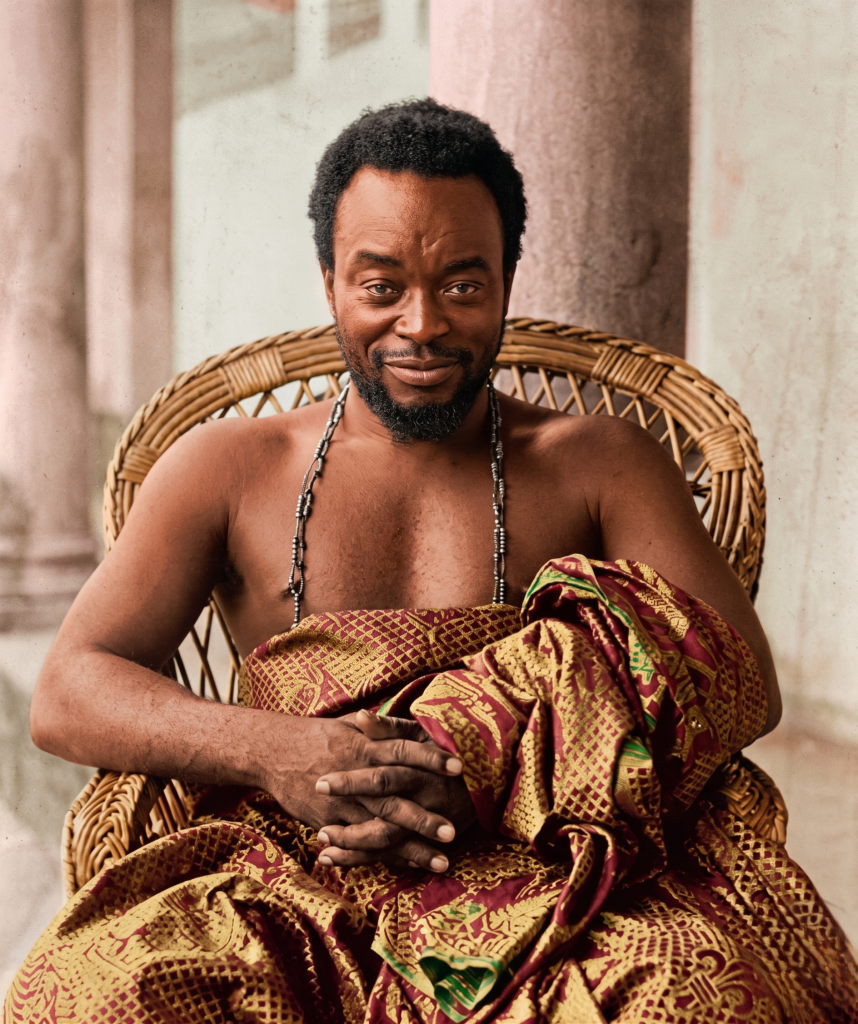
When Acting Consul-General James Phillips marched toward Benin City in January 1897, it was an explicit act of political provocation. He brought a party of British officials and African porters right during a sacred religious festival, actively ignoring the Oba’s formal requests to postpone the visit. Phillips intended to bully a sovereign king into submission. The chiefs of Benin, however, decided that an empire’s impatience would not dictate their sacred laws. At the village of Ugbine, an ambush wiped out the party, leaving only two British survivors.
The British press roared with outrage, labeling it a “brutal massacre” to manufacture consent for war. In reality, it was a swift, defensive military response to an unauthorized foreign incursion.
The Gathering Storm: The Road to Confrontation
To understand why blood was spilled in the forests of Ugbine, one must look past the immediate trigger of 1897 and examine the decades of economic warfare that preceded it. The conflict between the British Empire and the Benin Kingdom was not a sudden misunderstanding; it was a slow-burning explosion fueled by a direct clash of economic philosophies and national sovereignty.
By the late 19th century, European powers were frantically carving up West Africa during the “Scramble for Africa.” Britain’s industrial machine had an insatiable appetite for palm oil, used both as an industrial lubricant and for soap manufacturing, alongside a lucrative global demand for ivory. The British Niger Coast Protectorate was established with a singular directive: secure unrestricted access to the resource-rich interior, eliminate African middlemen, and funnel the wealth directly into British merchant ships.
Standing as a colossal barrier to this imperial ambition was the Benin Kingdom.
The Strategy of Benin Kingdom
Benin was not a loose collection of scattered villages; it was a highly centralized, ancient empire with sophisticated trade networks that had successfully navigated relationships with Europeans since the Portuguese arrived in the 15th century. When Oba Ovonramwen ascended the throne in 1888, he inherited a kingdom under siege by foreign commercial interests. He recognized that the British weaponized “free trade” as a tool for economic conquest.
In response, Oba Ovonramwen asserted his absolute sovereignty through a series of brilliant, defensive economic policies:
- Trade Monopolies: He declared royal monopolies on primary commodities like palm oil, rubber, and ivory, meaning European merchants could not bypass the crown.
- Customs and Taxes: He imposed strict taxes and tolls on foreign traders operating within Edo territories.
- Waterway Closures: When British merchants tried to undermine his authority, the Oba effectively choked the economic supply lines by closing the vital rivers and waterways leading to the interior.
The Boiling Point
To the British merchants and colonial administrators in Liverpool and Calabar, Benin’s economic self-defense was viewed as an intolerable insult to the British Crown. Tensions reached a boiling point in 1892 when Vice-Consul Henry Gallwey pushed the Oba into signing a text that the British claimed was a “protection treaty.” In reality, the treaty was a deceptive piece of colonial ledger-demain designed to strip Benin of its independence and hand its trade over to Britain. Realizing the deceit, Oba Ovonramwen swiftly repudiated the treaty and refused to yield.
From that moment on, British colonial officials were actively hunting for a casus belli, a justification for war. They began a targeted propaganda campaign, painting the ancient kingdom as a “barbaric” state steeped in human sacrifice to justify a military invasion to the British public. The stage was set, the script was written, and the empire was merely waiting for a spark to ignite the powder keg.
In November 1896, Phillips, the Vice Consul of a trading post on the African coast, planned to meet with the Oba in Benin City regarding trade relations between Benin and British officials. He formally asked his superiors in London for permission to visit Benin City, stating that the costs of such an embassy could be recouped through trade, including ivory. In late December 1896, before receiving a reply or approval, Phillips embarked on an expedition comprising
Phillips sent a message to the Oba stating that his mission was to discuss trade and peaceful relations and requesting admission to the territory. He also sent an envoy ahead bearing gifts. At the time, the Oba was celebrating the Igue festival, and he sent word that he did not wish to receive the British delegation during this period, indicating that he would send word later when he was ready to meet with Phillips and one Jakri chief.
On 4 January 1897, Phillips and his party were attacked during their journey to Benin City, near Ugbine village close to Gwatto. Most of the British officials were killed except two, Alan Boisragon and Ralph Locke who survived their injuries.
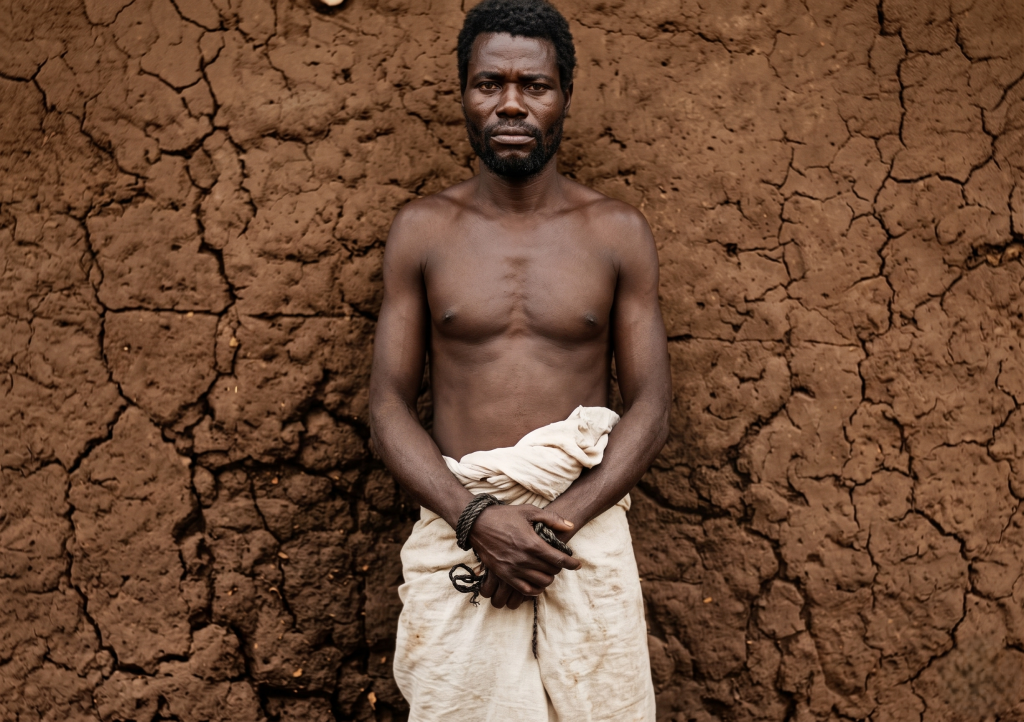
The Defiance of General Ologbosere
The British response was massive. In February 1897, a heavily armed force of over 1,200 men descended upon Benin. They possessed Maxim guns, rockets, and heavy artillery. They stormed Benin City, burned centuries of architectural marvels, and looted thousands of priceless ceremonial objects and bronze plaques. The Oba was captured and exiled to Calabar.
To the British, the war was over. To the Benin military elite, it had just begun.
While the capital lay in ashes and the monarch was stripped of his throne, Ologbosere, a high-ranking commander and titled chief, refused to break. He recognized that while the British held the city with superior firepower, they did not control the dense, unforgiving rainforests of the interior.
Ologbosere mobilized the remnants of the royal army and local populations, shifting from conventional defense to a highly organized, relentless campaign of guerrilla warfare.
For over two years, General Ologbosere and his fighters turned the Edo countryside into an impenetrable fortress of resistance, frustrating one of the most powerful empires on Earth.
Ologbosere’s strategy relied on the sheer structural strength and loyalty of the kingdom’s decentralized networks. His forces used the terrain brilliantly:
- They launched lightning-fast ambushes on British supply lines.
- They cut off colonial communication outposts.
- They constructed fortified stockades deep within the forest that baffled British reconnaissance.
The British colonial administration grew increasingly desperate. They found themselves bogged down in a costly, exhausting war of attrition against a population that flatly refused to recognize British authority. Ologbosere wasn’t merely hiding; he was actively governing a shadow state of resistance, sustained entirely by the food, intelligence, and loyalty provided by local villagers who viewed him as the true defender of the realm.
The Legacy of Unbroken Strength
The resistance was so formidable that the British had to launch multiple secondary military expeditions specifically designed to hunt Ologbosere down. It eventually took a combination of scorched-earth tactics, burning down entire villages suspected of aiding the rebels, and internal betrayals from exhausted factions to finally capture him in mid-1897.
When Ologbosere was brought to a mock trial and executed by colonial authorities in June 1899, he did not beg for mercy. He stood before his captors with the absolute dignity of a man who knew he had done his duty to his King and his ancestors.
“They did not attack out of savagery — they attacked out of sovereignty. The forest of Ugbine was not ambush terrain; it was sovereign ground, and they defended it as such.”— Historical analysis of the Ugbine engagement
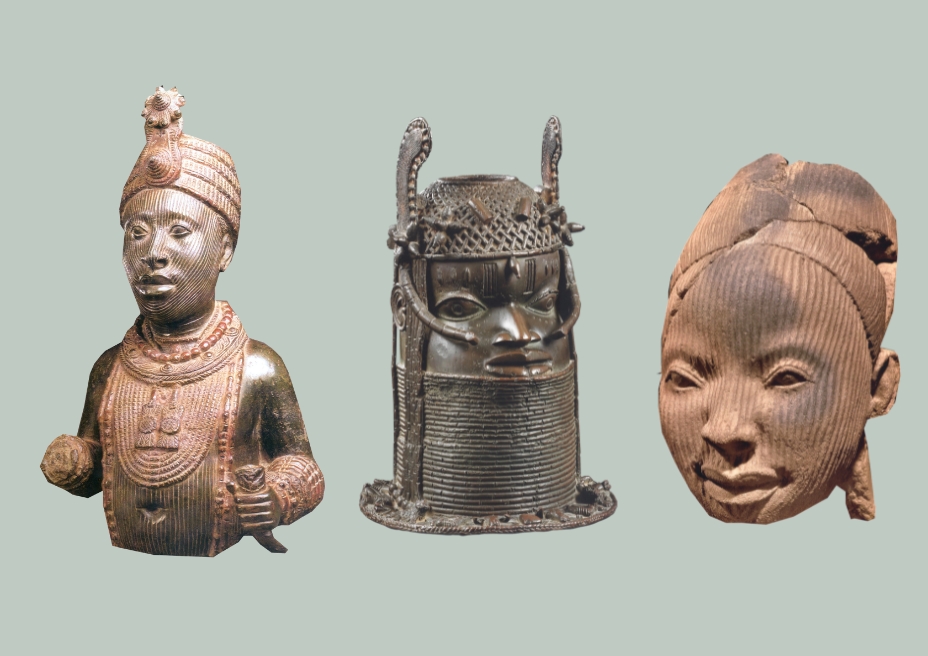
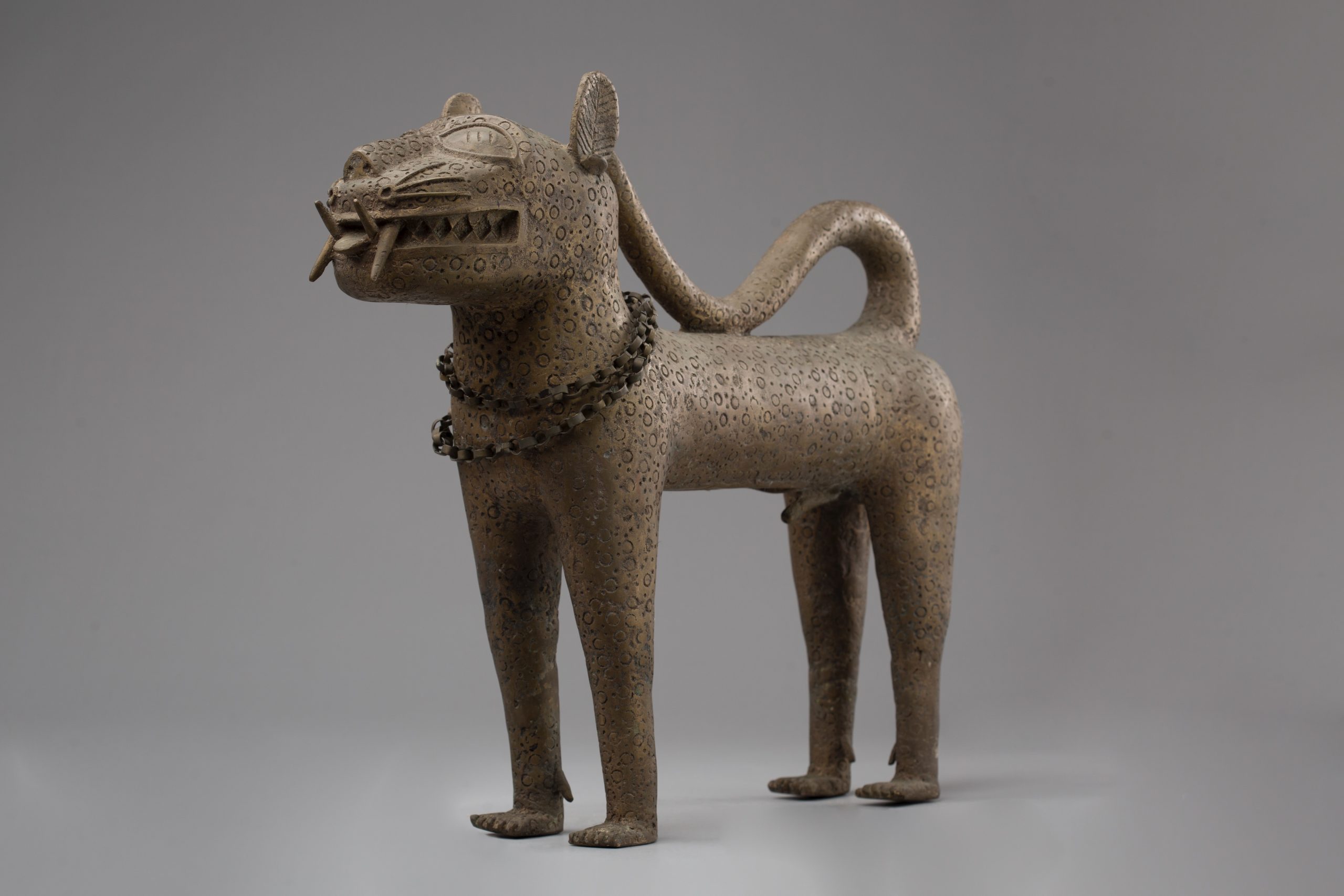
The story of the Benin Kingdom is often visually framed by the tragic displacement of the Benin Bronzes, which were scattered across Western museums as trophies of war. But the true artifact of Benin’s greatness is the spirit of Ologbosere’s resistance. It proves that the kingdom did not collapse like a house of cards under colonial pressure. It fought with immense structural strength, sophisticated military intelligence, and an unyielding belief in its right to exist. Ologbosere and his warriors ensured that British victory was never cheap, never absolute, and forever stained by the memory of Edo defiance.
The Collapse of the Resistance
The final collapse of the resistance was marked by a grim and calculated display of colonial retributive justice. Following their capture in mid-1899, General Ologbosere and his core circle of defiant war commanders, including prominent chiefs who had refused to bow to the British flag, were subjected to a staged military tribunal in Benin City.
On June 27, 1899, stood before a hostile court of occupying forces and compromised local chiefs, Ologbosere remained entirely unrepentant, fiercely defending his actions as the sacred duty of a soldier executing his King’s commands to repel an invading enemy. Undeterred by his unyielding dignity, the British colonial authorities sentenced him to death to permanently terrorize the populace into submission. The very next morning, on June 28, 1899, General Ologbosere was publicly hanged alongside his fellow warrior chiefs. Their executions brought a bloody close to a brilliant guerrilla campaign, but in dying for the sovereignty of the realm, these commanders cemented their names not as defeated rebels, but as eternal martyrs of Edo liberty.
The Aftermath: Ashes, Exile, and the Fight for Plundered Heritage
The defeat of General Ologbosere’s fierce resistance marked the physical conclusion of the war, but the true tragedy of 1897 lay in its devastating aftermath. What followed was not a standard administrative transition, but the systematic dismantling of an ancient, exceptionally well-organized civilization.
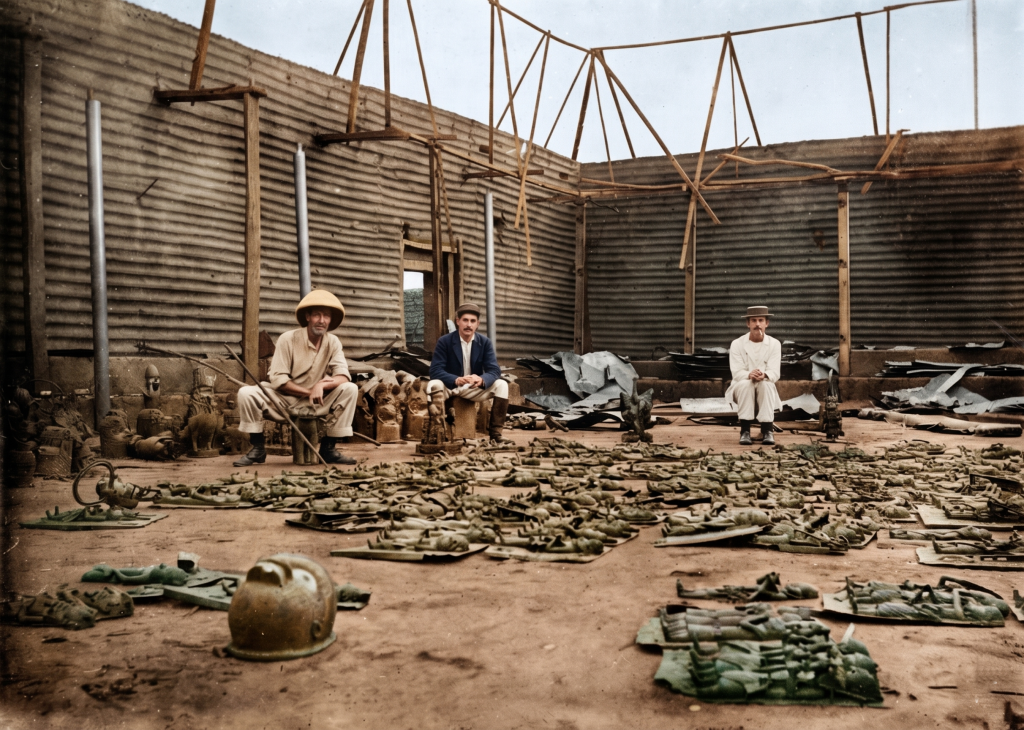
The Burning of a Civilizational Marvel
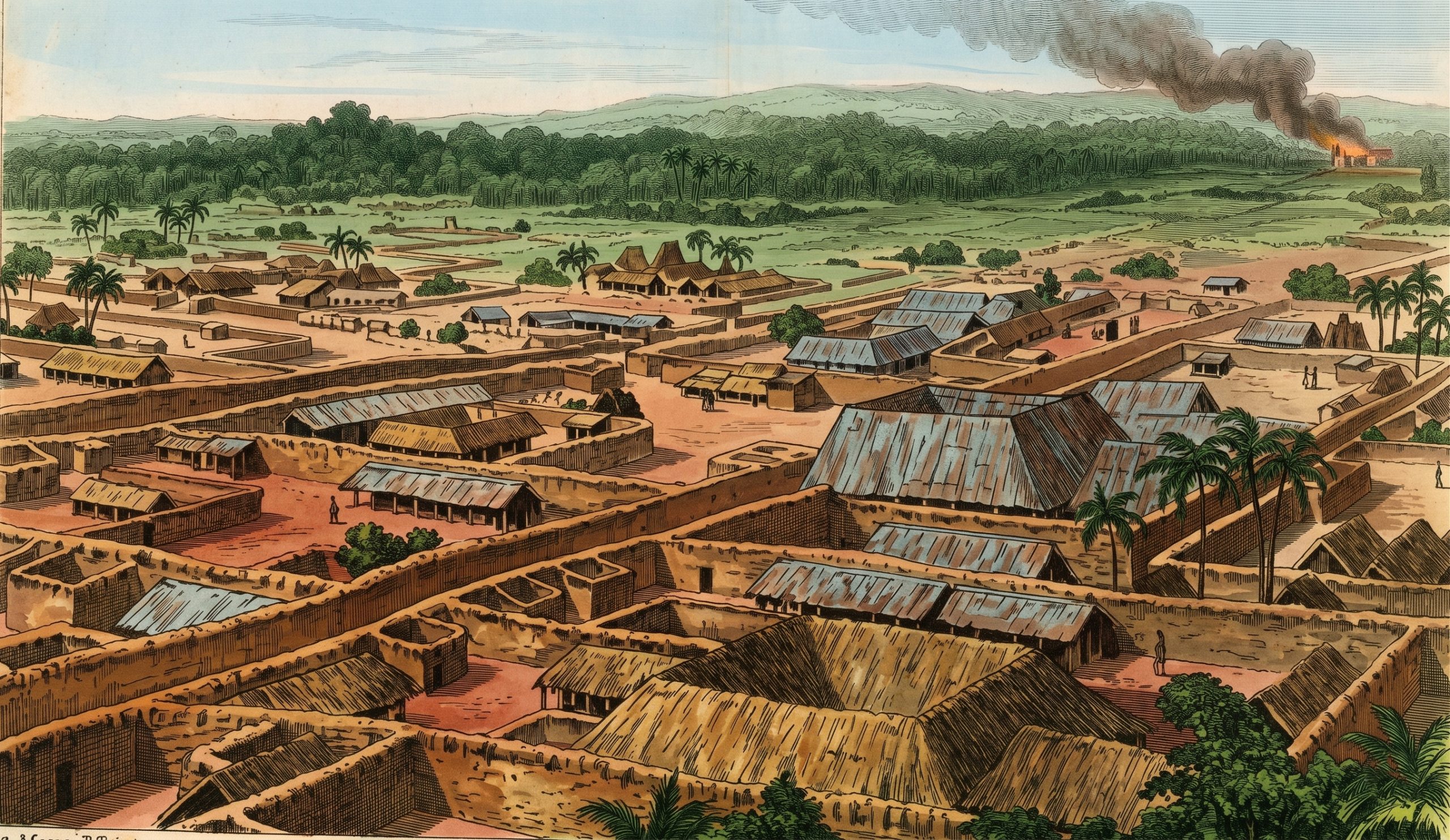
When the British forces firmly occupied Benin City, they did not just occupy a capital; they obliterated a masterpiece of urban planning and architecture. Benin City had been characterized by wide, straight streets, sophisticated underground drainage networks, and a massive earthen wall system that stood as one of the largest continuous defensive earthworks in human history.
On February 21, 1897, a fire swept through the city, an event the British claimed was accidental, but which aligned perfectly with their scorched-earth tactics. The royal palace, a sprawling architectural complex that housed centuries of historical archives, shrines, and administrative courts, was completely gutted. The physical heart of a remarkably stable civilization was reduced to ash, displacing thousands of citizens and turning a thriving metropolis into a smoking ruin.
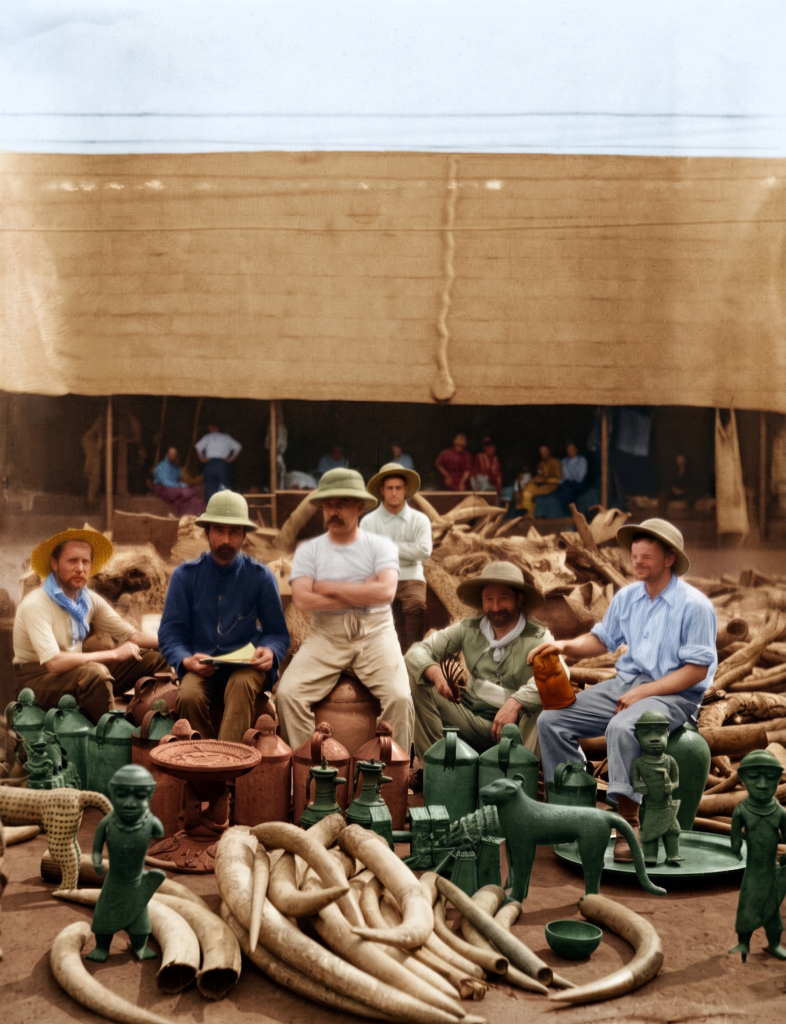
The Great Royal Plunder
As the city burned, the colonial forces carried out an organized, state-sanctioned ransacking of Edo cultural wealth. The British Looted between 3,000 and 5,000 ceremonial objects, ivory carvings, and beautifully cast bronze plaques, now collectively known as the Benin Bronzes.
These were not mere decorative items; they were the historical registry of the kingdom. Each plaque cast by the royal guilds recorded a specific historical event, a treaty, a lineage milestone, or a spiritual decree. The British officers openly photographed themselves sitting among stacks of plundered ancestral art, treating these vital historical documents as financial spoils to be auctioned off to Western museums and private collections to cover the expedition’s costs.
The Displacement and Exile of Oba Ovonramwen
With the city in ruins, the British sought to permanently decapitate the socio-political structure of the empire by targetting the divine monarch. Oba Ovonramwen was captured, formally deposed, and humiliated by being forced to kneel before British officers.
To prevent him from remaining a focal point for ongoing rebellion, he was exiled to Calabar, hundreds of miles away from his ancestral home. Cut off from his people, his spiritual duties, and his land, Oba Ovonramwen spent the remainder of his life in forced isolation until his passing in 1914. His exile was intended to symbolize the definitive end of independent Edo sovereignty.
Subjugation of the Monarchy: The Forced Royal Attire
The British eventually realized that they could not govern the deeply traditional Edo territories without the stabilizing presence of the monarchy. Following Oba Ovonramwen’s death, the colonial administration decided to restore the title, allowing his son, Prince Aiguobasinwin, to ascend the throne as Oba Eweka II in 1914.
However, this restoration came with strict, humiliating imperial strings attached. The British heavily modified the coronation rules to firmly assert their dominance. Most notably, they forced the new king to wear specific British-approved components within his ceremonial regalia during official colonial state events. This manipulation of royal attire was a calculated psychological weapon designed to visually signal to the entire populace that the divine Oba was now a subordinate employee of the British Empire, operating strictly under the watchful eye of a resident colonial officer.
The Modern Crusade: Nigeria’s Fight for Restitution
Following the violent plunder of the royal palace in 1897, more than 3,500 historic Benin artifacts were scattered across the globe, and today they are distributed among more than 130 museums and institutions worldwide. The single largest concentration remains in the United Kingdom, led by the British Museum in London, which holds over 900 pieces, alongside significant academic collections at the University of Cambridge’s Museum of Archaeology and Anthropology and the Pitt Rivers Museum in Oxford.
In mainland Europe, Germany holds the continent’s largest collection, predominantly split between the Ethnological Museum of Berlin, the State Ethnographic Collections of Saxony, and the MKG Museum in Hamburg, though Germany has systematically legally transferred ownership of over 1,100 of these pieces back to Nigeria while retaining some on long-term display loans.
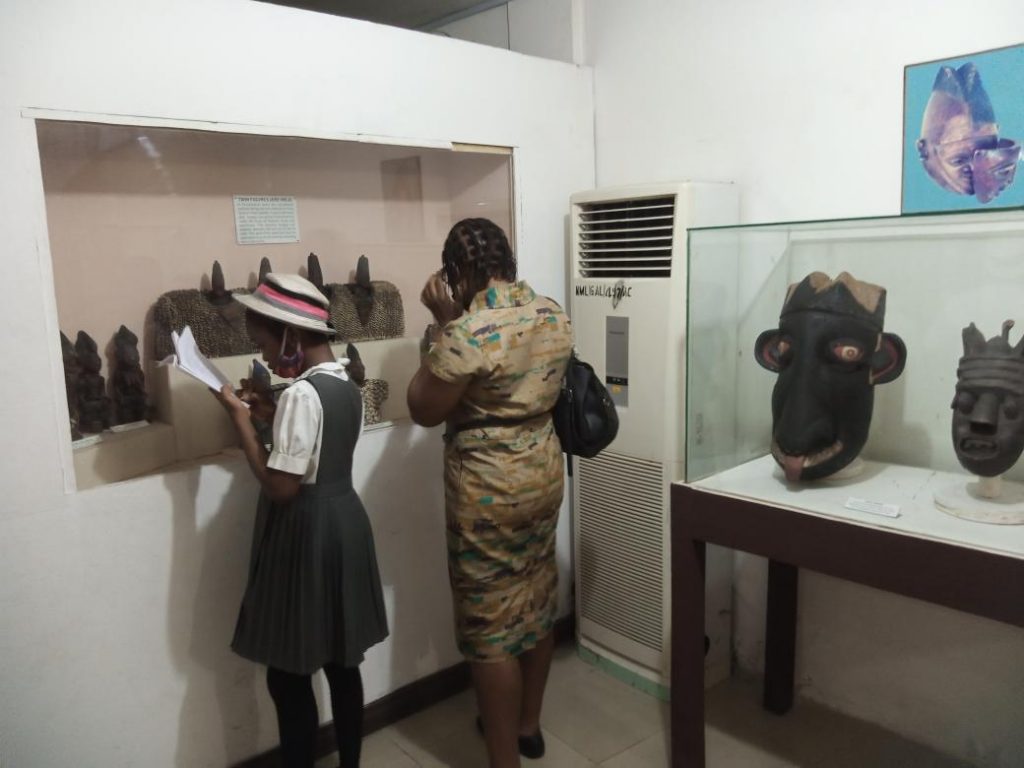
Other major European repositories include the Weltmuseum Wien in Austria and the Nationaal Museum van Wereldculturen in the Netherlands. In the United States, hundreds of artifacts are housed across dozens of institutions, with the largest collections situated at the Field Museum in Chicago, the Penn Museum in Philadelphia, and the Metropolitan Museum of Art in New York. Crucially, a profound portion of these treasures can also be found within Nigeria itself, notably at the National Museum in Lagos and the National Museum in Benin City, a presence that continues to grow as the global restitution movement successfully returns these plundered pieces to their ancestral home.
The story of the Benin Kingdom did not end with the humiliation of colonial subjugation. Today, it has evolved into a global struggle for justice, restitution, and historical reclamation led passionately by Nigeria and the Edo people.
The Historic Journey Back Home
For decades, Nigeria has maintained a relentless diplomatic effort to recover the stolen Benin Bronzes from foreign institutions. The argument is clear: these pieces were illegally pillaged during a war of aggression and represent the stolen soul and history of a living culture.
This campaign has yielded historic breakthroughs:
- Global Repatriation: Major institutions and governments worldwide, including Germany, the Smithsonian Institution, and universities across the UK and US, have officially transferred ownership of hundreds of bronzes back to Nigeria.
- The Royal Custodianship: In a monumental victory for historical continuity, Nigeria officially recognized the current Oba of Benin, Oba Ewuare II, as the legal custodian of all returned artifacts, ensuring they return precisely to the royal home from which they were violently taken.
- The Museum Future: Extensive plans are moving forward in Benin City to construct world-class museum facilities, creating a secure, state-of-the-art space where these priceless archives can be preserved, studied, and celebrated by the descendants of the very people who created them.
The ashes of 1897 could not erase the brilliance of the Edo civilization. Through the ongoing return of the Benin Bronzes, the narrative is being rewritten, transforming a story of colonial loss into a triumphant saga of endurance, cultural pride, and unbroken strength.
1,200+
British troops deployed in the Punitive Expedition, February 1897
3–5,000
ceremonial objects looted from the royal palace
Weeks
Ologbosere held the forest before eventual capture — months after the city fell