
October 27, 2025
“Museums are no longer passive storehouses of history; they are active institutions capable of shaping education, strengthening identity, stimulating economies, and supporting national development.”
For many years, museums in Africa have largely been perceived as quiet cultural institutions designed mainly for the storage and exhibition of historical objects. To a significant portion of the public, museums are places visited occasionally by tourists, researchers, and schoolchildren—spaces associated with old artifacts, traditional sculptures, archaeological discoveries, and fading memories of the past. While this perception is not entirely inaccurate, it is increasingly insufficient in explaining the true role museums can and should play within contemporary society.
Across the world, museums are undergoing a major transformation. They are no longer viewed simply as repositories of antiquities or ceremonial institutions dedicated solely to preservation and display. Increasingly, museums are being recognized as active contributors to education, economic development, cultural diplomacy, tourism, research, social inclusion, environmental awareness, and national identity formation. In many countries, museums now function as strategic public institutions capable of influencing national development far beyond the boundaries of exhibitions and gallery spaces.
In Africa, however, the transition toward this broader understanding of museums remains gradual. Despite the continent’s extraordinary cultural wealth and historical diversity, many museums continue to operate under difficult conditions shaped by limited funding, inadequate infrastructure, policy neglect, and outdated public perceptions. Yet within these same institutions lies enormous untapped potential. If properly repositioned, museums can become important drivers of intellectual development, economic growth, cultural sustainability, and social cohesion.
The need to rethink the role of museums has become even more urgent in an age marked by rapid globalization, technological transformation, climate change, identity crises, and cultural displacement. Societies are increasingly searching for ways to preserve historical continuity while adapting to modern realities. In this context, museums occupy a unique position because they serve as both custodians of memory and institutions of public education.
At their core, museums are knowledge institutions. Their responsibilities extend far beyond collecting and displaying objects. Museums acquire, document, preserve, research, interpret, and communicate materials that reflect the cultural, historical, scientific, and artistic experiences of societies. These materials may include archaeological artifacts, ethnographic collections, textiles, manuscripts, photographs, natural history specimens, ceremonial regalia, technological inventions, and contemporary artworks. Collectively, they provide evidence of how societies evolved, interacted, governed themselves, created systems of belief, and expressed identity across generations.
The importance of this function cannot be overstated. Nations require systems that preserve evidence of their historical experiences and cultural evolution. Without such systems, societies risk losing continuity between past, present, and future generations. Museums therefore function as institutional memory banks, safeguarding the material and intellectual foundations upon which collective identity is constructed.
In many African societies, this responsibility is particularly significant because large portions of indigenous history, philosophy, technology, and governance systems were traditionally transmitted through oral culture rather than extensive written documentation. Museum collections therefore preserve forms of evidence that are essential for reconstructing historical narratives and understanding cultural development. Objects housed within museums often carry information about political systems, religious beliefs, trade networks, artistic traditions, environmental adaptation, craftsmanship, warfare, migration, and social organization.
Yet despite their importance, museums frequently remain underutilized within national development planning. In many cases, cultural institutions are viewed as secondary priorities compared to sectors such as infrastructure, energy, healthcare, or technology. This perception reflects a broader misunderstanding of the relationship between culture and development. Development is often discussed primarily in economic or technological terms, while cultural institutions are treated as symbolic rather than strategic assets.
However, sustainable national development cannot exist independently of cultural consciousness. Nations require not only roads, industries, and digital systems but also institutions that preserve identity, strengthen social cohesion, and support intellectual continuity. Museums contribute to these goals in ways that are often less visible than physical infrastructure projects but equally important over the long term.
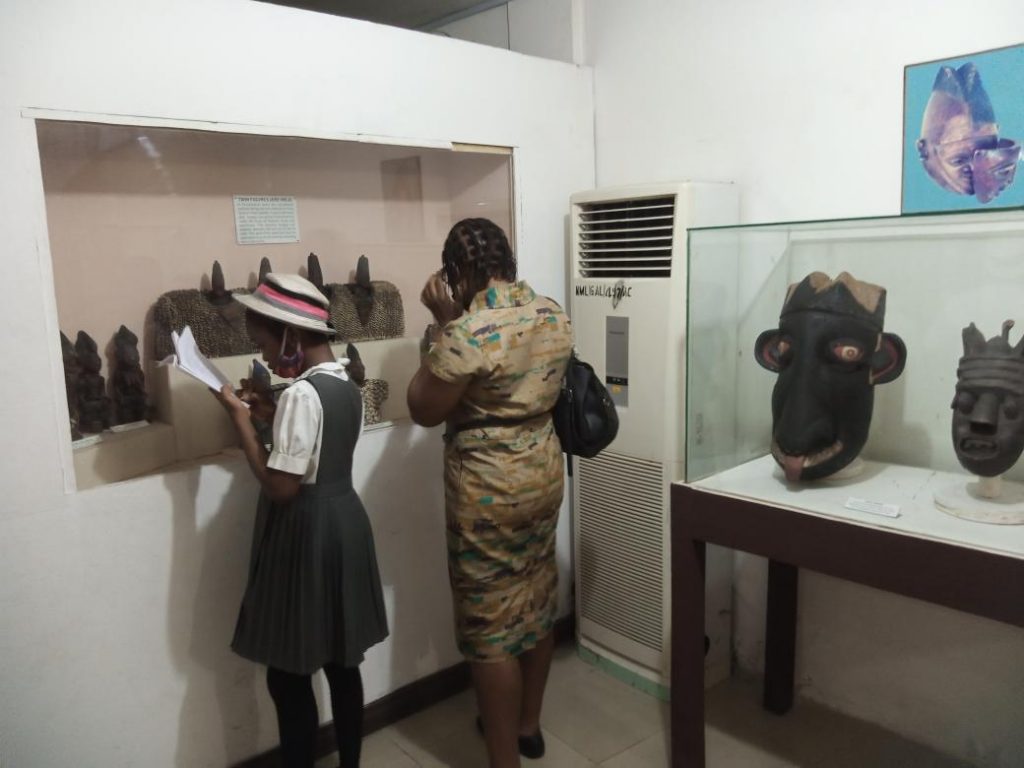
One of the most immediate areas where museums contribute to national development is education. Museums provide forms of experiential learning that complement formal classroom education. Through direct interaction with objects, archives, visual materials, and exhibitions, students encounter history and culture in tangible ways that textbooks alone cannot provide. Seeing a ceremonial mask, archaeological object, ancient manuscript, or historical textile creates a different level of engagement than simply reading about it.
This educational role extends beyond history. Museums support learning across disciplines including science, technology, art, environmental studies, anthropology, archaeology, and social studies. Science museums promote scientific curiosity and innovation. Natural history museums contribute to environmental awareness and biodiversity education. Art museums stimulate creativity and critical thinking. Ethnographic museums encourage understanding of cultural diversity and indigenous knowledge systems.
In countries with well-developed museum systems, institutions actively collaborate with schools, universities, and research organizations. Educational programmes, guided tours, workshops, internships, and outreach initiatives transform museums into dynamic learning environments. Unfortunately, in many African contexts, such collaborations remain underdeveloped due to resource limitations and institutional constraints.
The research function of museums is equally important. Museum collections contain vast amounts of information that support academic scholarship and scientific investigation. Researchers in fields such as archaeology, anthropology, conservation science, art history, zoology, linguistics, and environmental studies rely heavily on museum collections as primary sources of evidence.
For example, archaeological collections help reconstruct ancient settlement patterns and trade systems. Ethnographic materials preserve knowledge about indigenous technologies, ritual systems, and artistic traditions. Biological collections support biodiversity research and environmental monitoring. Conservation laboratories contribute to scientific understanding of material deterioration and preservation techniques.
Yet in many African institutions, large portions of collections remain insufficiently documented or inaccessible due to limited staffing, inadequate storage systems, and poor research infrastructure. This represents a major missed opportunity. Strengthening museum research capacity could significantly contribute to national intellectual development and knowledge production.
Museums also play an increasingly important role within tourism economies. Cultural tourism has become one of the fastest-growing sectors globally, driven by growing interest in heritage, identity, and authentic cultural experiences. Visitors increasingly seek destinations that offer historical depth and meaningful engagement with local culture. Museums serve as critical anchors within these tourism networks.
Countries that successfully integrate museums into tourism planning often benefit from increased revenue generation, job creation, and international visibility. Museums stimulate economic activity through visitor spending on transportation, hospitality, crafts, food services, and related sectors. They also create direct employment opportunities for curators, conservators, educators, designers, security personnel, researchers, administrators, and cultural practitioners.
Africa possesses extraordinary cultural resources capable of supporting vibrant heritage tourism industries. Ancient kingdoms, archaeological sites, traditional artistic traditions, historical monuments, and ethnographic collections provide immense potential for museum-based tourism development. However, many institutions struggle with outdated exhibitions, poor publicity, inadequate visitor facilities, limited digital presence, and weak integration into national tourism strategies.
Modernization and investment could dramatically change this situation. Interactive exhibitions, digital interpretation systems, educational programming, accessible facilities, and effective marketing strategies can transform museums into major cultural destinations. Successful museum tourism not only generates revenue but also strengthens international appreciation for African history and creativity.
Another important dimension of museum relevance lies in nation-building and social cohesion. Many African countries continue to navigate complex questions surrounding ethnicity, colonial history, political identity, globalization, and cultural change. Museums provide structured spaces where these histories and identities can be explored critically and constructively.
Through exhibitions and public programming, museums contribute to collective memory formation. They shape how societies understand their histories, celebrate achievements, confront difficult pasts, and define shared values. In multicultural societies, museums can promote national unity by presenting cultural diversity as a source of collective strength rather than division.
This role becomes especially important during periods of social transformation. Urbanization, migration, technological change, and globalization are rapidly reshaping patterns of cultural transmission. Younger generations are increasingly disconnected from traditional knowledge systems, languages, and historical experiences. Museums therefore serve as bridges between generations, helping preserve continuity while facilitating adaptation to modern realities.
The relationship between museums and technology has also evolved significantly in recent decades. Digital technology has transformed how museums document, preserve, and communicate collections. Digitization projects, online catalogues, virtual exhibitions, and 3D imaging systems now allow museums to extend access far beyond physical gallery spaces.
This transformation became particularly evident during global disruptions such as the COVID-19 pandemic, when many institutions relied heavily on digital platforms to maintain public engagement. Museums that invested in digital infrastructure were able to continue educational programming, virtual tours, and online exhibitions despite physical closures.
Digitization also strengthens preservation efforts. High-resolution imaging, digital databases, and environmental monitoring systems improve collection management while creating backup records that preserve information even if objects become damaged or lost. For institutions managing vulnerable collections under difficult environmental conditions, digital documentation provides an additional layer of security.
However, technological transformation also introduces new challenges. Sustainable digitization requires stable infrastructure, professional training, data management systems, and long-term maintenance planning. Digital preservation itself becomes an ongoing responsibility. Museums must therefore balance technological innovation with realistic institutional capacity.
Climate change represents another major issue increasingly affecting museums globally. Rising temperatures, humidity fluctuations, flooding, pollution, and pest activity are placing growing pressure on museum collections and infrastructure. Many African museums operate within buildings not originally designed to withstand contemporary environmental challenges. Poor ventilation, unstable electricity supply, overcrowded storage, and aging infrastructure further complicate preservation efforts.
These realities highlight the importance of sustainable museum practice. Increasingly, museums are exploring environmentally responsive approaches that reduce energy dependence while improving preventive conservation. Natural ventilation systems, passive climate control, low-energy storage solutions, and climate-responsive architectural design are becoming central to contemporary museum planning.
Preventive conservation itself has emerged as one of the most critical aspects of modern museum management. Rather than focusing primarily on restoration after damage occurs, preventive conservation emphasizes risk reduction, environmental monitoring, proper handling, integrated pest management, and long-term collection care. This approach recognizes that preventing deterioration is generally more effective and sustainable than attempting repair after damage has already taken place.
For African museums operating under financial constraints, preventive conservation offers practical advantages. Strategic planning, routine monitoring, and improved storage systems often provide greater long-term protection than expensive interventive treatments. However, implementing effective preventive conservation requires institutional commitment, professional training, and policy support.
Another area where museums contribute significantly to national development is cultural diplomacy. International exhibitions, collaborative research projects, traveling exhibitions, and restitution discussions position museums as important actors within global cultural relations. Museums influence how nations are represented internationally and how cultural heritage is understood across borders.
This dimension has become particularly prominent in debates surrounding the restitution of African artifacts held in foreign institutions. The return of looted objects raises important questions about ownership, ethics, conservation capacity, and historical justice. At the same time, restitution discussions have drawn international attention to African museums and the need for stronger cultural infrastructure across the continent.
Repositioning museums within national development frameworks therefore requires more than increased funding alone. It requires a shift in perception at both institutional and public levels. Museums must no longer be viewed simply as static repositories of old objects but as active public institutions capable of generating educational, economic, social, and intellectual value.
This transformation also requires stronger policy integration. In many countries, cultural policy remains disconnected from broader development planning. Museums are rarely integrated meaningfully into educational reform, tourism strategy, environmental planning, or digital development frameworks. Yet museums intersect with all these sectors in important ways.
Governments must therefore recognize museums as strategic national institutions rather than optional cultural luxuries. Sustainable funding mechanisms, professional development opportunities, infrastructural investment, and legislative support are necessary for museums to fulfill expanded responsibilities effectively.
The private sector also has an important role to play. Partnerships between museums and businesses can support exhibition development, educational programmes, digitization projects, conservation initiatives, and public outreach activities. Corporate sponsorship of cultural institutions should not be viewed merely as philanthropy but as investment in national cultural capital.
Community participation remains equally important. Museums function most effectively when connected actively to the societies they serve. Local communities possess knowledge, traditions, oral histories, and cultural practices that enrich museum interpretation and strengthen relevance. Participatory approaches encourage shared ownership of heritage and improve public engagement.
At the same time, museums themselves must adapt to changing public expectations. Contemporary audiences increasingly seek interactive, inclusive, and socially relevant experiences. Static displays accompanied by minimal interpretation are often insufficient for modern engagement. Museums must develop more dynamic approaches to storytelling, education, and audience participation.
This does not mean abandoning scholarly rigor or conservation responsibility. Rather, it means communicating collections and histories in ways that remain accessible, meaningful, and relevant to diverse audiences. Successful museums combine intellectual depth with public accessibility.
Importantly, repositioning museums as engines of national development does not imply reducing them to economic tools alone. Their value cannot be measured solely in revenue generation or visitor statistics. Museums contribute to less quantifiable but equally essential dimensions of society including memory, identity, critical reflection, creativity, and historical consciousness.
These contributions become especially important in societies experiencing rapid change. As urbanization, migration, technological transformation, and globalization continue to reshape cultural life, museums provide spaces where continuity and adaptation can coexist. They preserve evidence of where societies have come from while helping citizens reflect on where they are going.
The future of museums in Africa will depend largely on whether governments, institutions, and the public are prepared to embrace this broader understanding of museum relevance. The continent possesses extraordinary cultural resources and artistic traditions capable of supporting globally significant museum systems. What remains necessary is sustained investment, strategic planning, institutional modernization, and stronger public recognition of the role museums can play.
Ultimately, museums are not simply buildings filled with artifacts. They are institutions that preserve memory, generate knowledge, support education, stimulate economies, strengthen identity, encourage dialogue, and connect generations. Their importance extends far beyond exhibitions because they operate at the intersection of culture, history, research, development, and national consciousness.
Repositioning museums as engines of national development therefore represents not merely a cultural ambition but a strategic necessity. Nations that invest in preserving and interpreting their heritage strengthen not only their historical foundations but also their capacity for sustainable intellectual, social, and economic growth.
The challenge now is whether African societies are prepared to fully recognize the transformative potential already present within their museums.
Nwaokobia Stephanie Chinonso writes from National Museum Lagos